Friday, November 30, 2012

How does she keep her girlish figure?

Clockwise from top: Cheerio bar, Nanaimo bar, butter tart
I love the way Canada is just slightly different from the United States. At first it all looks the same and then you start to notice the differences, which are many and subtle. I'll limit myself here to the differences in Canadian baked goods. The abundance of bakeries, tea rooms, and cafes in Victoria made it easy to do my research yesterday.

Findings:

-Shortbread is the chocolate chip cookie of British Columbia. It's everywhere. I did not sample any shortbread as I would be unable to stop eating it and I already know what shortbread tastes like.

-British Columbians do not malign the fruitcake. I saw numerous home-baked fruitcakes for sale and bought a marzipan-topped cake at a popular bakery called Bubby Rose's. I asked the woman at the counter how long it would last and she considered for a minute and said, "June?" I'm going back to the Dutch Bakery (thank you Anonymous) to buy one of their fruitcakes today.

-I noticed lumpish agglomerations of Cheerios and mini marshmallows at several bakeries before I realized this was a trend. I bought a Cheerios bar and discovered that it contained not just the evident Cheerios and marshmallows, but also peanut butter. I liked it, but was able to stop eating without struggle. It's no Rice Krispie treat.

-I was unacquainted with the Canadian butter tart until yesterday afternoon, but now we are dear friends. Generally sold as muffin-size pies, a butter tart consists of a flaky pastry crust that holds a golden and very gooey raisin filling. It's like a bright, sunny pecan pie, but with raisins instead of/in addition to nuts. I'm going to try baking the bar version of this lovely sweet.

-The ubiquitous Nanaimo bar involves a chocolate crumb crust topped with a layer of vanilla custard/buttercream topped with a thin, firm coat of melted chocolate. Because quests make everything more fun, I decided to find the best Nanaimo bar in Victoria. I would be in the hospital now if I'd actually tasted every bar in town, but I did sample quite a few and can say with some assurance that in Victoria you want to buy your Nanaimo bar from Bond's Bond (the best vanilla filling) or the cafe at the Royal British Columbia Museum (the best crust).

There are some vile Nanaimo bars out there. The filling in one seemed to be made with canned frosting, but the worst was a raw, organic pretender made with dates, brazil nuts, and coconut oil. I'm not going to malign the coffee house where I bought it, but can offer a warning: An earthy cafe that employs young hippies to ladle up the lentil soup will, as a rule, serve Nanaimo bars you don't want to eat.

I had dinner at Re-Bar on Wednesday night -- thank you Anonymous! It was great.

I bought breakfast at Devour yesterday morning -- thank you to another Anonymous. Devour is a tiny, bright place and along one wall are shelves of kitchenwares and cookbooks.

Devour
I spent a few minutes studying the collection. A lot of familiar titles, but a handful of others I'd never heard of, like a gorgeous book by Neil Perry, an Australian chef who is much adored by commenters on amazon. The collection was just slightly different from what you find back home.
 Vij's cookbook is there.

Tuesday, November 27, 2012

The pause that refreshes?

I fell behind.
In fact, nothing needed refreshing. The pause happened because living/cooking/eating/plotting got so far ahead of posting that catching up started to feel impossible. Weeks went by. The hole got deeper. The only solution is to do the most cursory catch up, forget the rest, and move on like I never missed a beat.

Cursory catch up:

1. I wrote a story on antique pie recipes. I've wondered about those mysterious old pie recipes for decades and now I don't have to anymore -- and neither do you! -- because I baked enough obscure vintage pies to learn that recipes go extinct for a reason. Well, usually. In case you don't want to read the whole story, Jefferson Davis pie is delicious, dark, and raisiny, though you really have to love both highly spiced Christmas puddings and the gooey part of pecan pie to appreciate it. Butterscotch meringue pie is also excellent, though you really have to love both butter and sugar to appreciate it. Since that includes almost everyone, I made the butterscotch pie again for Thanksgiving and my sister and I agreed that it was the best pie of the night.

2. I wrote a story about berries, which I turned in last week when no berry except the cranberry is in season. It was challenging to describe the exquisite appeal of a Hood strawberry or an Idaho huckleberry when I've never seen or tasted either, but I've always suspected I could write fiction. We'll see whether the editor agrees. I became fixated on berries while writing the story and was inspired to bake a red raspberry pie for Thanksgiving. This was my husband's favorite pie and while it was very tasty, it was no butterscotch meringue. I used frozen berries because Janie Hibler said it was ok and she wrote the book on berries
No one was hooked.
3. I also turned in a story about the Momofuku Milk Bar Cookbook.  I'll spare you the big think on Milk Bar until the story runs. If it runs. I will just say that the Milk Bar crack pie  was the least popular of the Thanksgiving pies and that Milk Bar's Saltine panna cotta is revolting.
inedible
4. In addition to the aforementioned pies, Isabel and I baked rhubarb pie, lemon chess, chocolate cream, pecan, and pumpkin. Various wags referred to the rhubarb pie as "celery pie" because the rhubarb, which came from our garden, was green. Do you like the word wags? I hope not because I will probably never use it again.
celery pie 
5. That's about it for Thanksgiving, but I made the Smitten Kitchen Cookbook S'more cake for Owen's birthday party. It consists of graham cracker-flavored layers sandwiched with milk chocolate ganache and iced with meringue. Predictably, the boys were in awe of the cake's billowy bakery shop beauty and that counts for a lot. It was a fine cake, but after the first day, no one ate any. If you cut a cake and no one touches it for five days, this is not a cake you should make again. A great cake is always in play.

Why wasn't this cake great? I can't really put my finger on it, but the pieces just didn't quite work together. It was less than the sum of its parts.
great looking, not great
7. However, every last floret of Smitten's broccoli slaw vanished within 24 hours. The recipe is on her site and you should make it. More than the sum of its parts.

8.  November is a hard time in America to concentrate on the cuisine of Southeast Asia, but I've tried. The tender greens salad from Burma is a wonderful melange of blanched pea shoots, fried garlic fried shallots, roasted peanuts, and lime juice. The recipe is here. The grapefruit salad was less harmonious, but with some tweaking could be great. The sweet tart chicken was very plain, and the beef stew with shallots was tasty. I may take a hiatus from Burma, as the next few weeks just don't feel Burmese.

9.  Tomorrow I am going to British Columbia on magazine business for a few days. If you have any restaurant suggestions in either Victoria or Richmond, please send them my way.

Sunday, November 11, 2012

Burma, Burma, Burma and a little Smitten


"This is one of the most unusual and delicious dishes I have ever come across," writes Naomi Duguid in the preface to her recipe for Kachin pounded beef with herbs. 

And this is now one of the most unusual and delicious dishes I have ever come across, as well. I hadn't been madly in love with anything I'd cooked from Burma until Tuesday night, when I served the Kachin pounded beef. You need to make it. The recipe is here.

I'd never cooked meat this way before and you probably haven't either, which is part of the magic. Easy magic, though; don't be intimidated. You cut beef chuck into cubes, braise it, saute it, and then pound it to shreds in a mortar with ginger, garlic, Sichuan pepper, cilantro and salt (I recommend a bit more salt than she calls for.)  If you don't own a big, heavy mortar you could probably use a mallet and a cutting board to get the job done. As you pound you're simultaneously tenderizing the meat and pummeling zesty flavor into every morsel, a technique that makes our crude chunks and rectangles of pot roast and steak seem primitive.

I made Duguid's Mandalay carrot salad that same night, another recipe that entails pounding, but here it's carrot shreds that get the treatment. After you pound them with fish sauce and lime juice, you toss the tart, salty shreds with roasted peanuts, toasted chickpea powder (which makes everything mellow and starchy -- I adore this condiment), dried shrimp powder, and caramelized fried shallots.  Serve with rice. I have not cooked a better dinner in ages.

A few nights later, I made Duguid's silky Shan soup which was equally interesting to make and almost as fun to eat. I would call this "velvety porridge" rather than "silky soup" but whatever it's called, it's tasty. You mix chickpea flour with boiling water and cook until it's thick and shiny then pour this rich porridge over tender white vermicelli noodles and blanched greens. Serve in individual bowls and dress it up, congee style, with chile oil, shallot oil, roasted peanuts, cilantro and any other assertive garnishes that appeal.

I could eat this every day and lately do.
My kind of food.  I ate leftovers for lunch on Friday, for lunch and dinner on Saturday, and for breakfast this morning. I should tell you, though, that the reason there was so much left over was that no one else liked it. We don't have a tradition of savory porridge in this country and my family found it "too weird." I have to agree that the texture of this dish takes a little getting used to. It took me about 4 seconds.

On another subject, The Smitten Kitchen Cookbook landed 10 days ago. I admire Deb Perelman tremendously. I'm both jealous and in awe of the way she has kept that blog fueled, week in, week out, never missing a beat. It can't be easy. She is a pro and I had to own her book.

And I'm glad I do. Smitten Kitchen is both a supremely polished production and a labor of love. Really, the best kind of cookbook. While I'm not as charmed by Perelman's stories as some readers are, no one is going to force me to read them all. While I'm not personally drawn to 100% of the recipes, I know that they will all work perfectly. I can't wait to bake the S'more layer cake and the deepest dish apple pie and I have already tried her recipe for buttered popcorn cookies. These were so sweet-salty-buttery-delicious that my nephew Ben ate a dozen or so and then cried when he found out there were none left. I wanted to cry, too!

Tuesday, November 06, 2012

Vote YES on Measure B

Sometimes we all get compulsive.
I baked 10 old fashioned American pies over the weekend and what a fascinating lesson that was in the dangers of romanticizing the past. Two of the pies were delicious, two were ok, and the rest found their best and highest use as lunch for the chickens. I have to finish the story about the pies today. Whenever a deadline looms, I decide I need to write a blog post, even when I have little to say.

Here's what I want to say: Michael Ruhlman put up a great, thought-provoking  piece yesterday about the propriety of sharing political views on a food blog. Then he shared his political views. If you have an hour or so to spare, you should read the post and then read the 200+ comments, which run the gamut from "Rock on!" to "I believe it is abhorrent to murder unborn babies for the 'convenience' of a woman, and will never visit your blog again, Mr. Ruhlman. Have a nice life."

What do you think about politics in non-political forums? I can't decide what I think. I admire the way Ruhlman just put it out there and let people bark at him. You have to be tough to take that, tougher than I am for sure. I'm glad he did it, but I'm also glad everyone doesn't because the whole internet would burst into flames and explode and we'd all just end up hating each other even more than we already do. Am I the only one ready to get back to Facebook posts about cats?

You're all wondering now, so I'll just spit it out: I really am voting yes on Measure B. But I have to finish this pie story first, so it's time to get cracking. I'll link to the story when it's published and will leave you with a piece of advice: If you're planning to bake the sour cream raisin pie on page 273 of Marjorie Mosser's Good Maine Food (1939), you should reconsider.

sour cream raisin pie.

Friday, November 02, 2012

Fiddling while Jersey floods

shards of toffee on whipped cream on cake
What a disastrous week. You Easterners have been very brave! Cookbooks have seldom seemed more trivial.

I decided to keep cooking from Burma because if I stop I might never go back. Last weekend, I served Naomi Duguid's sweet-tart pork belly stew which is made by braising this unctuous, inexpensive cut with lemongrass, shallots, garlic, and dried hibiscus blossoms. The wrinkled blackish hibiscus blossoms serve, in Duguid's words, as a "souring agent" and the stew they soured was unlike anything in my gastronomic frame of reference. You expect braised pork to be rich, fatty, and mellow, but this meat was rich, fatty, and tart. As Michael Ruhlman writes in Twenty (more on that shortly), acid is typically used to "brighten" flavors, and I've had New Mexican pork dishes where tomatillos did just that. But the flavors in this Burmese stew needed no brightening. They needed dulling.

I'm not saying the stew was unappetizing. Not at all. We ate it with modest gusto. But it was just too confusing for our non-Burmese palates and I probably won't make it again.
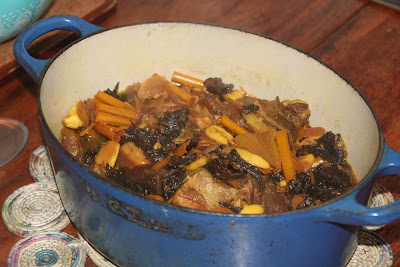
lots of mystery stems and flowers in there
Nor will I go back to Duguid's smoky Napa cabbage, a pallid, watery stir fry. Duguid writes that oyster sauce gives the dish a "smoky undernote" but I didn't pick it up. Not bad, not good, not worth talking about at length. Maybe I'm just not that into cabbage; I would always rather eat kale.

Monday night, I served Duguid's saucy beef and potatoes. To make this, you fry some shallots (of course) and ginger in hot oil, add cubed potatoes and brown them, add water and simmer until the potatoes are soft, add ground beef, spices, and chopped tomatoes, cook, cook, cook, and serve. It's Burmese hamburger hash, wicked ugly, but delicious and like everything I've cooked from the book so far, quick and easy.

That's all I have to say about lovely Burma for now, but I have so much to say about Ruhlman's Twenty I think I might burst. Twenty won prestigious awards and clearly speaks to a lot of readers and you might be one of them. I am not. I can't help it! It's just not in my nature to like this kind of book. I read Ruhlman's Twenty cover-to-cover and found it grandiose, inexact, and frustrating. Michael Ruhlman argues that cooking depends on twenty elegant techniques, while I think cooking is about ten thousand details. This might be the unbridgeable rift between lumper and splitter.

I'll briefly make my case and then cut to the happy ending.

Twenty is the somewhat arbitrary number of techniques that Ruhlman believes are essential to cooking well.  He's pretty loose with his definition of "technique," and includes ingredients, like salt, eggs, and sugar, because understanding how to manipulate these ingredients entails learning techniques.  For instance the chapter on eggs covers hard-boiling eggs, scrambling eggs (in a double boiler and reportedly delicious), shirring, whipping up mayonnaise, putting egg whites in cocktails, and a short disquisition on custards. Technically speaking, that's at least six techniques right there and you could argue that the very title of the book is misleading. But let's not.

According to Ruhlman, until you master his twenty techniques you're not going to get too far as a cook: "Without the culinary fundamentals nothing, nothing, of importance can be attempted. Classic chef arrogance and truth."

But once you have these culinary fundamentals down, the kitchen is, so to speak, your oyster: "There's virtually nothing you can't do."

Each essay (one per technique) is followed by recipes. I decided to bake Ruhlman's angel food cake, which is topped with whipped cream and homemade toffee because the photograph was so beautiful I wanted to tear it out and frame it. Maybe because I've baked dozens of angel food cakes, nothing in Ruhlman's essays on sugar, eggs, or batter, expanded my understanding of this cake. That's ok. But it was less ok that the recipe was imprecise and glitchy. Ruhlman never specifies what size pan to use nor does he explicitly warn against greasing the pan. In fact, he tells you to pour the batter into a "prepared pan." There are several ways you could interpret this, and a novice might take "prepared pan" to mean a greased pan, which would be the right guess for almost any cake except angel food. When I was learning to cook, I would have read that recipe, greased the pan, and ended up with an angel food brick.

I know this was a trivial slip, a forgivable editorial error, but it's an error that illustrates my point: You can master Ruhlman's twenty noble techniques, but bake your angel food cake in a greased pan and you're screwed. These countless quirky, puny, nettlesome details really do matter. A house needs a foundation, but it also needs doors, windows, and curtain rods.

On Sunday, I baked his cider vinegar tart. For years, I've been fascinated/repelled by the concept of vinegar pie, a mysterious dessert that regularly pops up in vintage American recipe collections, like my 1939 edition of Imogene Wolcott's New England Yankee Cookbook.

In the headnote Ruhlman writes, "Critical to the outcome of this simplest of all pies is the use of a good vinegar -- the tart is not worth making with bad vinegar. Otherwise it's better to use lemon juice!"

Given that good cider vinegar is "critical to the outcome of this simplest of all pies" I wanted to know what brand Ruhlman recommends. Bragg's, maybe? He doesn't say. Is organic better? Wood barrel aged? Unfiltered? Dark? Pale? Cloudy? Clear? Doesn't say. Short of arranging a cider vinegar tasting, does he have any advice? You have to dig for it, but in his essay on "acids" there's this pearl of wisdom: "You usually get what you pay for. A very cheap vinegar tastes that way. The best vinegars are delicious, not simply harshly acidic."

In other words, if you're not up for buying and tasting all the vinegars on the shelf, grab the most expensive one.

This non-answer was almost enough to make me resubscribe to Cook's Illustrated** right then and there so I could see the results of their 2006 cider vinegar tasting, which were hidden behind a paywall. Few people have spent more time pricing and testing supermarket foods than I have, and while you often get what you pay for, you just as often don't. Anyway, I refused to buy expensive cider vinegar  on faith and used the 365 cider vinegar we had in the house. The resulting tart, which I brought to my sister's house for dinner, was barely edible. Imagine a thick, yummy shortbread crust topped with cold, sweet, congealed vinegar.
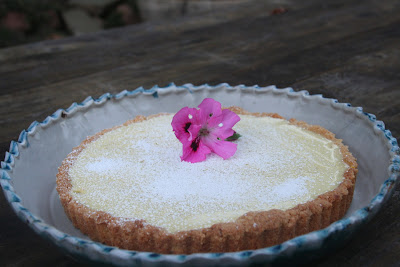
Looks aren't everything.
If you absorb Ruhlman's breezy generalizations about the importance of acid in cooking (that it will enhance your cream soups, butterscotch sauce, and pulled pork) you will definitely become a slightly better cook. But your tarts are still going to taste like foot juice if you don't know what brand of cider vinegar to buy. Details, details, details. Cooking is all about the details and there are thousands of them.

Now I will tell you what I loved in the book: Ruhlman's method, borrowed from Harold McGee, of poaching eggs. This made the prettiest, tidiest eggs.
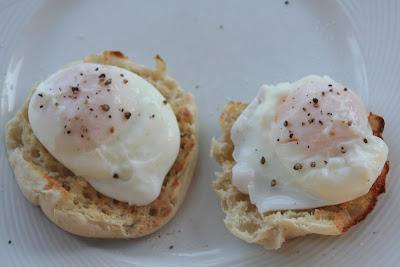
loveliness
Heat a saucepan of water. Crack your egg in a ramekin, slide the egg into a slotted spoon and let a little of the loose, watery white drain off (there will be more or less depending on the egg), then slip the egg back into the ramekin. When the water boils, turn down the heat and when the bubbles stop, slide the egg into the water and poach for 3-4 minutes. I will never make poached eggs any other way again.

*Here's exactly what Ruhlman says about angel food cake pans: Even if he had a tube pan, he writes in the headnote, he wouldn't use one because it's so hard to get angel food cake out of a tube pan. (Actually, it isn't hard at all if you have a tube pan with a removable bottom.) He prefers to use a springform pan and after he's poured the batter into the pan, he puts a pint glass in the middle to create the hole. The accompanying photographs illustrate the springform method. At the end of the headnote he writes, "If you prefer a tube pan, line the bottom with parchment/baking paper." There is no mention anywhere of preparations -- parchment? butter? butter and flour? -- for the springform pan in the headnote, but in the recipe he refers only to "the prepared pan." As I said, you could read this several ways. Also, for the record, there's no need to use parchment in the bottom of a tube pan with a removable bottom, although nothing bad will happen if you do.

**This morning I succumbed and bought a 14-day trial subscription to Cook's Illustrated (which I must promptly cancel), so I could access the results of their 2006 tasting of ten cider vinegars. The two top rated vinegars: Spectrum unfiltered (22 cents an ounce) and a French brand called Maille (24 cents per ounce.) White House vinegar (6 cents an ounce) was moderately well liked ("good balance of acidity") while Heinz (6 cents an ounce) was unpopular: "very acidic without much apple." The most expensive vinegar they tested was Verger Pierre Gringras ($1.19 per ounce): "It smelled 'awful' was 'stinky,' and imparted 'burnt, ashy flavors.'"

I might have to keep that subscription.

Saturday, October 27, 2012

The Lady of Shallots

Neither Suriani banana jelly nor Guatemalan banana jelly contain shallots. 
The choice of Burma by Naomi Duguid for my next book was poorly timed, as tackling two shallot-based cuisines in a row is sapping my cooking spirit. I just have to read the words "heaping cup of thinly sliced shallots" and my eyes start to sting. I need goggles.

Last week, I made the chicken salad from Burma,  which consists of chopped rotisserie chicken tossed with lime juice, sliced raw shallots, fried shallots, shallot oil, and toasted chickpea flour. It was great. Strewing toasted chickpea flour over a salad seemed bizarre, but made perfect sense after the first bite as the chickpea flour serves the role of a crouton, but a crouton that has been powdered and dispersed over every morsel of salad. In other words, a perfect crouton. The following day I ate leftover chicken salad in a sandwich with lettuce and mayonnaise and it was fantastic. Isabel ate the chicken salad wrapped in a cold flour tortilla. Big thumbs up for Burmese chicken salad. You can find the recipe here, although I would skip the chicken breasts and use a rotisserie chicken.

The next night I served Duguid's pork sliders (i.e. meatballs) which are flavored with garlic, lemongrass, ginger, tomato, and minced shallots. Recipe here. They were too pungent for me, but popular with the others. To accompany the sliders I made eggplant delight (mashed eggplants, minced shallot, and egg cooked in shallot oil) which was too eggplanty for the others, but popular with me. I have also  braised a pot of  Duguid's sweet-and-tart pork belly (pork, hibiscus flowers, a generous cup of  shallots) but we aren't going to eat that until tonight so I can't tell you anything about it except that it is murky and full of wilted purple hibiscus flowers.

Burma is wonderful and exotic, but I'm just not feeling energized. I think I need a palate cleanser between South Asian cuisines. Suggestions please! I have pre-ordered Smitten Kitchen, but that won't arrive until next week. I'm going to buy Jerusalem at the Omnivore Books event, but that's next week, too. What should I do in the meantime?

To try to answer that question I went to the library the other day and walked out with two books, neither of which is going to work for the blog:

-Fannie's Last Supper by Christopher Kimball is what book critics like to call a "slim volume," words I must have used 450 times in a national magazine, but somehow can't employ in my little blog without wincing. Why is that? The bok recounts Kimball's attempt to recreate a 12-course Victorian feast using Fannie Farmer's 1896 cookbook as his guide and it is hilarious and smart and eccentric. I started reading it before I fell asleep and finished when I woke up, which is the beauty of a slim volume. But there was not a single dish in its pages that I wanted to cook. I wanted to make the soup that involves boiling down a whole calf's head and garnishing it with "brainballs" least of all.

-I haven't read Michael Ruhlman's Twenty yet, so can't offer an opinion. Not that I would offer any but the most glowing opinion after stumbling across this thread. Ruhlman's rebuttal puts me off Twenty more than the review that inspired it. Later, I looked for more reviews of Twenty and found this delightful cookbook blog. She rambles so much less than some cookbook critics I could name who often seem to forget why they started a blog in the first place.

And on that note: The final dinner I cooked from The Suriani Kitchen by Lathika George was a thick stew of beef, coconut, shallots, and tapioca.
tapioca
I had to make this dish because I had to try cooking fresh tapioca. I did not know that tapioca was the same foodstuff as yuca, the tasty spud-like starch I enjoyed when I was a high school exchange student in Costa Rica, but now I do. I liked tapioca/yuca then, I like it now, and I'm glad I had the experience of cooking it at least once in my life. Tapioca is cheap, easy to peel, easy to chop, and has the mild flavor and texture of a slightly fibrous potato. It is even less nutritious than a potato.

The other dish I knew I had to make before I closed the Suriani chapter was banana jelly, as I am a little bit hung up on bananas. To make Suriani banana jelly you briefly cook bananas in water, pour the mixture into a sieve and let the juice strain off overnight. (You mustn't press on the fruit, George warns, lest you release solids that will cloud the jelly.) The next day, cook this clear fluid down with sugar and eventually you end up with a delicate, translucent preserve that is very sweet and faintly banana flavored. We liked it. Didn't know quite what to do with it after enjoying a little on toast, but definitely liked it.

This seemed like the moment to also try making the Guatemalan banana jelly from Copleand Marks's False Tongues and Sunday Bread, a recipe that caught my eye years ago. For this more primitive jelly you just boil bananas with sugar and orange juice for an hour or so until you have a cloudy preserve that resembles apple butter, but tastes like banana baby food. I love banana baby food, so I was pleased. Of the two, I would make the Guatemalan jelly again because of its more emphatic banana flavor, but probably won't because there is just no demand in this household for banana jelly. 

The only other sweet I made from The Suriani Kitchen was mango mousse, and it was probably my favorite recipe in the whole book. George doesn't call for whipping the cream, which I think is a mistake, and I added twice as much chopped mango as she called for and omitted the cinnamon which she uses as a garnish. This was absolutely delicious, almost worth the price of the book.

2 cups mango puree
1 cup Greek yogurt (or strained homemade)
1/2 cup cream, whipped
1/4 cup sugar syrup, cooled (boil together equal parts sugar and water and chill)
1 cup chopped mango

1. Mix together the first 4 ingredients and chill.
2. Fold in the chopped mango. Serves 4. 

And there you have it.  I made 23 recipes from The Suriani Kitchen:

worth the price of the book -- 0
great -- 9 (fish molee, mousse, toddy pancakes)
good -- 5
so-so -- 9
flat out bad -- 0

Clearly The Suriani Kitchen is not a shelf essential, but if you're ever in the Indira Gandhi Airport at 9 p.m. and have extra rupees to unload and happen to come across a copy. . .  

Wednesday, October 17, 2012

Back into the Suriani Kitchen

a butte of puttu.

"Out of curiosity I asked a hundred Syrian Christians what their favorite food was, and it was no surprise that more than eighty of them said -- 'puttu!'" -- Lathika George, author of The Suriani Kitchen.

I knew I couldn't move on to a new cookbook until I had made puttu, which sounds like a dirty word but is just one of many pasty rice dishes in George's book and apparently the most special.

Only diehard cooks will find this fascinating, but here's the full puttu report:

To make puttu per George's recipe, you mix roasted rice flour with salt and water to form a crumbly dough which you then push through a sieve to work out any lumps. This takes an eon, after which you alternate layer of crumbs with spoonfuls of grated coconut in a cylindrical puttu kuti and steam your puttu. (Lacking a puttu kuti, lightly greased ramekins work.) In pictures on the internet, puttu appears to be pasty tubes of firm white carbohydrate, but my puttu immediately collapsed into a pile of crumbs. These crumbs were quite pleasant to eat, like couscous with the flavor of unseasoned rice, if you can imagine such a knockout dish. I was not convinced I had done puttu justice.

On Sunday, I tried again. This time I aimed for a wetter batter and I used coconut milk instead of water to provide the coconut flavor. I then omitted the grated coconut because I am tired of coconut whiskers in everything I eat. This second puttu steamed into a cohesive puck of bland starch, as you can see in the photograph at the top of the page. Perfectly edible, but I don't understand how something so innocuous could possibly be anyone's favorite dish. I suspect it's one of those comfort foods you just have to grow with to love, like grits or mashed potatoes or poi. 

Both times, I served the puttu with a spinach thoran and you don't have to grow up with spinach thoran to know that it is a delicious, easy, and unfattening way to get more leafy greens into your diet. 


Spinach thoran, barely adapted from The Suriani Kitchen by Lathika George.


1/ 2 cup unsweetened shredded coconut

1 serrano chili, sliced  (seeds removed if you don't want the dish to be too spicy)

1 teaspoon fresh ginger, chopped

2 cloves garlic
6 shallots, sliced
1/2 teaspoon cumin seeds
1/2 teaspoon kosher salt
4 cups spinach, chopped into 1/4-1/2 inch shreds
1 teaspoon oil (or slightly more -- but you really do just want a tiny amount)
1/2 teaspoon black mustard seeds
6 curry leaves
2 dried red chilies, torn in half

1. In a food processor or powerful spice grinder, grind the first 7 ingredient to a paste. Mix with the spinach, massaging it into the leaves with your hands.

2. In a big skillet, heat the oil. Add the mustard seeds and when they burst, add the curry leaves and chiles. Saute for a minute or two.

3. Add the spinach and sprinkle with a little water. (Very little. The first time I added too much and the dish was a bit soggy. The second time I added maybe a tablespoon and the dish was perfect.) Cover and cook for a few minutes, until the spinach is soft and hot. Serves 2.

Monday, October 15, 2012

A night on the town with Aida

a new low in photography
Thank you for the funny and poignant comments on the last post. I loved them all. My grandmother, who is 100, has always hated having her picture taken and when forced to endure a photograph, turns her face in profile because someone once told her that it's her most flattering angle. In pictures she is often gazing worshipfully up at the person beside her, no matter how unworthy of worship that person is, as in the photo above which I took on Saturday night. You might need a magnifying glass because the light is dim and my grandmother has become so small, but she is gazing adoringly at Owen. Vanity is ageless.

About a year ago a commenter on this blog recommended Cafe Rehoboth, an Ethiopian restaurant in San Jose. Owen, Isabel, and I made a date to take my grandmother to dinner there on Saturday and when we got to her house we rang the bell repeatedly, then I called on the phone, which no one answered, then we rang some more before she finally appeared at the door, tiny and dear. This is standard operating procedure. She was dressed in a gray skirt and sweater with a scarf and a barrette in her hair and she looked snappy, but she immediately said, "I feel so sick and tired! I don't know what is wrong with me. Suddenly I was getting dressed and I felt exhausted. I am so glad you are here because I thought I was going to faint."

I never know whether to take her seriously or cajole her. I said, "Why don't you sit down and I'll get you a glass of water."

Grandmother: "Maybe a little glass of rum? It is good for the heart."

Cajole.

I brought her a tablespoon of rum in a tiny crystal glass with an ice cube, the only way my grandmother drinks anything, including wine. She sat in her wing chair, took bird-like sips, fretted.

Grandmother: This might be my last day, you know.

Jennifer: Then let's make this the best day ever.

Owen: Maybe you should take her pulse.

Jennifer: Ok. . . oh no, I can't find it. She must be gone.

Ha ha ha.

She wanted me to write down the number of a specific ambulance company in case she fainted at the restaurant. She made me look in a drawer for the number, but the drawer was full of Christmas napkins.

Cafe Rehoboth sits in the middle of a half-abandoned street and the carpeted dining room, very humble and homey, is tucked behind a defunct bar. The hostess treated my grandmother like a queen, which made her happy. My grandmother is soft-spoken and gentle, but very regal; my grandfather used to say that her political leanings were "monarchist."

She was disappointed that the restaurant did not serve cocktails, so she ordered mango juice. It came in a pint glass without ice and this bothered her deeply. As I said, she likes to take liquid from dainty glasses, with ice and she could not stop talking about that enormous, stupid pint glass.
By the time the food came, she'd almost finished the juice.
The food was fantastic, spicy and rich, and the injera, made with teff, was tangy and spongy and all was exactly as it should be. My grandmother ate, ate, and ate, and was eating long after the rest of us were stuffed. Owen began teasing Isabel and doing irritating things with his feet under the table and the bickering started.

I hissed at Owen, "If you do that one more time you are going outside to wait for us on the street!"

My grandmother said, "He's just having fun. Be nice." Then she reached for another piece of injera and Owen started teasing Isabel again. It went on like this for about 20 minutes and I too wished that Cafe Rehoboth served cocktails.
beef, beef, chicken, cabbage, garbanzos, homemade cheese, salad
Eventually, my grandmother decided she'd eaten enough, I paid the bill (she asked how much it was and gasped -- standard operating procedure), and we drove away. "I didn't like that so much," she said. "It was not very delicious."

In the backseat, Isabel laughed. My grandmother always complains about restaurant food after she eats us all under the table and we wouldn't want it any other way.

To finish the evening, we went to Nirvanaah, an Indian ice cream shop I'd read about on Chowhound. If you are ever within 100 miles of Sunnyvale, California you need to come here. I ordered a scoop of thandai ice cream without knowing what it was. What it was: a wildly delicious fruity, nutty, aromatic dessert that I must eat again soon even if that means replicating it in my own kitchen. There were other seductive Indian flavors, but  my grandmother ordered a vanilla ice cream cone which she ate with relish. She seemed to have forgotten all about fainting and dying. 

Thursday, October 11, 2012

Does this pizza oven make me look fat?

Now those are some arms!
I looked stout in that photo in the last blog entry. I winced when I saw it, but posted it anyway. Monday night, a friend emailed me:

that is one impressive oven! unbelievable. not my favorite picture of you ever.

The nerve! I fumed. I lost track of what was happening on Homeland and sat on the sofa pursuing a train of thought that belongs on another blog, but since this is the only blog I've got, I will hold forth very briefly before moving on to Suriani cuisine.

After I spent all of Sunday building, stoking, and tending a 1000+ degree fire in an oven I constructed from scratch and singlehandedly carried around loads of firewood, cleaned the house, and made appetizers, pizza, apple pie, and Greek yogurt gelato for eleven dinner guests, my neighbor took a snapshot of me wearing a floral apron and welding gloves and waiting for a pizza to cook. The heat had melted burned off a chunk of my bangs and I'm not at my skinniest. I was pretty sure I wasn't going to love the photo and I was right. I did not look smashing. I decided not to care. How thoroughly annoying that someone had to voice their agreement!

I am 46 and suspect that "favorite pictures" are going to be an ever scarcer commodity and I am going to have to be ok with that and so is everybody else. If we only show the world "favorite pictures" we will all eventually become invisible and when you are invisible you don't get credit for your achievements, and who doesn't want credit for building a weird earthen oven in her yard? There was a picture of me looking plain with the oven and there was a picture of the oven all by itself and I made an editorial decision. The correct editorial decision. Far from making me want to take the dumpy picture down, my friend's offhand remark (I am not holding a grudge!) made me glad I had posted it. I think Lena Dunham's outfits are often awkward and outlandish, but I'm completely down with what she's trying to do.

And without further ado, Syrian Christian food.

My children do not like fish, but I felt I had to make at least one fish recipe from The Suriani Kitchen, given how central seafood is to the Surriani diet. Here is Lathika George on Suriani fish cookery: "Tiny sardines are marinated in spices and fried crisp in coconut oil; chunks of kaalanji (a backwater salmon) simmer with chilli and coccum in earthenware pots over smoky wood fires; whole karimeen is wrapped in banana leaves and roasted in the glowing embers of the hearth; and shrimps are stir fried with slices of tender coconut, spices, and the omnipresent curry leaves."

Just reading this I gained 5 pounds. Not that I would ever care about something like that.

I chose to make fish molee, which George describes as a "creamy fish curry, probably influenced by travelers from Malaya." As Whole Foods did not have any kaalanji or karimeen, I bought cod filets. At home in a big skillet I fried onions, garlic, curry leaves, ginger, cloves and hot green peppers, then added coconut milk and the cod. Twenty minutes later we had a sumptuous stew of tender white fish poached in spicy coconut gravy. It was fabulous -- suave, white, rich, aromatic -- and unlike anything they serve at most Indian restaurants in the United States.

Unfortunately, the accompanying paalappams -- rice pancakes that are supposed to look like this -- failed. The batter stuck like a second skin to the skillet and we ended up with scrambled dough.

That was Tuesday. Last night I cooked a splendid dinner full of exotic delicacies, but an account will have to wait until later as I am all out of vim.

Tuesday, October 09, 2012

Enough about that blasted oven


You really do need big laborer's arms to build an oven like that.
Saturday, we (sister, brother-in-law, me) insulated the cob oven with mud and straw. Sunday, I lit a fire and let it burn slowly for a while and then I let it rage and then a lot of people (sister, brother-in-law, niece and nephew, neighbors Joan and Bill) came over and I pushed all the coals to the back and sides of the oven and we made pizza.

How was it? The crusts weren't as thin and crisp as they should have been and I complained a lot about that, but in fact the pizzas were very successful and the oven did its job admirably. I have some ideas about how to do better in the future and the oven is definitely getting another layer of insulation before I plaster it.

Also, I decided we need a picnic table in the backyard. Half the party was up in the kitchen and half the party was hovering around the oven and it was not exactly restful or communal for the hostess/pizzaiola. Running the pizzas through the bedroom and up the stairs and then down the stairs and then going back up for the welder's gloves and trying to balance a wine glass on the edge of plywood planter beds,  I felt like I was acting in a Marx Brothers movie, except not a very funny Marx Brothers movie.
I think I should have put the pizza in while there were still biggish flames.
I will now shut up about the oven for a while and give you two outstanding recipes.

Since I was using her book to make the pizza dough, I decided to try some new dishes from Nancy Silverton's Mozza. I chose these dishes because looked easy. They were unbelievably easy and unbelievably delicious.

If you can still get figs where you live, make figs wrapped in pancetta right away. Writes Silverton: "I certainly didn't invent the idea of contrasting the sweetness of figs with something piggy and salty: figs and prosciutto is a classic."

That is true, but while I've eaten many tasty sweet/piggy/salty dishes before, this one was special.

fresh figs (they don't have to be soft and perfectly ripe; this recipe will redeem slightly firm figs)
thinly sliced pancetta
your most expensive balsamic vinegar.
wedge of Parmesan

1. Cut off any hard bit of stem and halve the figs lengthwise.
2. Wrap each fig half in a strip of pancetta.
3. Heat a cast iron skillet until very hot and sear the figs, flat side down, for 2 minutes. Turn the figs and sear on the other side for 2 minutes.
4. Arrange the figs on a plate and drizzle very sparingly with balsamic vinegar. Shave strips of parmesan cheese on top. Serve with toothpicks.

Note: Next time I will try putting a shard of Parmesan underneath the pancetta to let it melt a bit. The figs would be easier to eat and you'd be sure to get all the elements of the dish in each bite.

For dessert I made Silverton's Greek yogurt gelato expecting a slightly icy frozen yogurt. What I ended up with was a mountain of ethereal, velvety, tangy, snow-white gelato that I will be making again and again. Silverton says to mix all the ingredients in a bowl, but you can just put them straight into your ice cream machine and spare yourself the dishwashing. I did.

1 quart whole milk Greek yogurt (you can use well-strained homemade)
3/4 cup sugar
1/4 cup plus 2 tablespoons light corn syrup
1/4 teaspoon kosher salt

1. Scrape all the ingredients into your ice cream machine. Freeze. Serve immediately. Makes 1 quart.

Going forward, I'm wrapping up The Suriani Kitchen over the next week. I have a suspicion most people aren't too interested in this obscure cookbook or obscure cuisine, but I can't quit until I've tried a few more of these dishes, especially some of the rice pancakes and dumplings, the pickled limes and the banana jam. I would be disappointed in myself. After I close the Suriani chapter, I'm thinking Burma.

Friday, October 05, 2012

On fire


We're getting there.
I apologize for my absence. Our household seemed to be falling apart and I decided to devote 2 weeks to getting our lives in order and what that meant was very little cooking or blogging. I started volunteering at the middle school lunch counter, sawed down a small tree, bought earthquake insurance, finished our taxes, acquired a shredder, baked 2 birthday cakes, panned a novel that Janet Maslin loved, spent $40 on drawer organizers at the Container Store, organized drawers, paid delinquent bills, went to Naomi Duguid's talk at Omnivore Books (and bought her new book, Burma, which looks terrific), rewired 3 lamps, and "sold" my mother's car, which has languished in our driveway for the last 30 months. I waited so long to sell that sucker that Isabel grew up and in 65 days will be eligible for a driver's license so I am buying my sister out.

I also worked on our backyard oven. We left this riveting saga at the point where Owen and I had completed construction of a sturdy, well-insulated platform. Then we went to India. Then I went to Utah. Then I came back and, with the help of my neighbor Bill and his rock saw, built an elegant brick arch for the door.
Right about here, Owen lost all interest in the oven.
Once the mortar on the arch had set, I mounded damp sand behind it upon a layer of fire bricks.

harder than it looks
After collapsing repeatedly, the sand eventually held a dome shape. I did not enjoy this step and missed Owen's company.

The next day, I mixed a stiff dough of sand, clay, and, water to cover the sand dome. Mark helped with this part, as did Bill and his wife, Joan, and I am eternally grateful to the three of them because if I'd had to do this by myself, I might be in a wheelchair now. It was hard.
wet clay oven
Two days later, the clay dome felt firm to the touch, so I scooped out all the sand. The hollow dome dried some more. It cracked. I patched it up. It dried some more. This morning I built a fire inside and the dome grew fiercely hot and smoke (or steam?) started seeping out of hairline fissures. I'm not sure what to do about that, as the literature is vague on the topic. Cob oven literature is vague on many topics.

Tomorrow, I'm going to insulate the oven with a thick paste of clay and straw. After that: plaster. If all goes well,  I'll try to make pizza on Sunday. I sure hope it's delicious! Then I can cross this epic project off my to-do list and will really be caught up.

Tuesday, September 25, 2012

Finally we hit our stride

Would you serve a Suriani dinner to him?
My sister and I host family dinners on alternating Sundays and this past weekend was my turn, which is always both a burden and a thrilling opportunity to show off. I was hesitant about cooking from The Suriani Kitchen because the dishes haven't been universally wonderful, but I went ahead, the stars aligned, everything was outstanding, the kids ate a lot of challenging food, the adults drank just enough wine, and all was well in our little world, despite a loud debate about whether Clint Eastwood's Republican National Convention speech was embarrassing or effective. Those of us who grew impassioned/obnoxious apologized. Again, I am sorry, Dad.

We ate:

spicy beef pot roast
lentils with coconut milk
kallappams
double-decker apple pie

Dish by dish:


spicy beef pot roast -- Lathika George excavated this recipe from the vintage journal of a remote rubber plantation, which made it almost irresistible to me. The dish consists of chuck roast dosed with a truckload of Indian spices and braised for 4 hours. Here's the thing: I couldn't tell the difference between this Indian pot roast and an American pot roast. If pot roast was a person he would be a fat, merry older man with red cheeks who likes a glass of Port after dinner in front of the hearth. He's always genial company and spices can't change his essential nature, which is pleasant and accommodating. This particular pot roast accommodated 3 tablespoons of mustard seeds, 5 dried red chiles, cloves, cinnamon, black pepper, and garlic and he was still just an easy-going old pot roast. That is what I love about pot roast.

lentils with coconut milk -- The ubiquitous Indian legume porridge -- which often goes by the name dal -- is also very forgiving, very relaxed and mild mannered. I've made lots of dals over the years and don't think I've ever had a bad one. This version was very good. My 6-year-old niece drank it like soup and asked for seconds, which made me glow, but I think I've made better, richer dals so I will not go overboard and type the recipe.
snow-white kallappam batter
kallappams -- This is where I want to use copious exclamation points, capital letters, italics, hyperbole. I loved the kallappams I made the other night, they are exactly the kind of dish I wanted to find in The Suriani Kitchen: New (to me) and totally delicious. Kallappams are thickish, spongy, coconutty pancakes, nutritionally empty, easy to prepare, and perfect for sopping up rich, spicy gravy. I've since found several recipes in other Indian cookbooks which look similar, and other recipes on the internet. I can only vouch for this recipe, though I would be open to variations. The recipe reflects my adjustments and opinions.

3 cups medium grain white rice soaked in water for 2 hours
2 cups water
1 cup dried, unsweetened coconut
1/4 cup cooked rice (SORRY! OMITTED THE FIRST TIME.)
1/2 teaspoon kosher salt
3 tablespoons sugar (I'd cut it down to 2 unless I was eating this in a dessert or snack context)
1 teaspoon instant yeast.

1. Grind the soaked rice with the water in a blender or food processor for a few minutes until it becomes smooth and milky and the rice is broken into small bits. Add the coconut and cooked rice and grind for 2 minutes more.

2. In a bowl, mix the rice batter with all the other ingredients. Cover with a damp towel and let sit in a reasonably warm place for a couple of hours.

3. Pour 3/4 cup of the batter on a hot, lightly greased skillet (you really don't want much oil on the skillet because the pancake will soak it all up) and cook over medium heat until light gold on each side. Don't try to flip the pancakes too soon; wait until they're pretty cooked. Repeat until all the pancakes are done. 

finished kallappams
Double-decker apple pie. There are Suriani desserts I need to try, but it's easy to put off steamed rice paste porridge when hundreds of ripe apples on our tree are yelling at me to make pie or cake. I went with a double-decker pie from Southern Pies by Nancie McDermott: crust filled with apples, topped with crust, topped with apples, topped with crust. It didn't sound promising to me because I'm a filling person, not a crust person, but in fact this pie was terrific.
All day I struggled not to eat the last slice and then, at 8 p.m., I ate it.

Saturday, September 22, 2012

The single supermarket solution


At least I don't have to crack and grate them by hand.
I live near both a Safeway and a Whole Foods. When I need aluminum foil, sugar, Windex or Rice Krispies, I go to Safeway and buy everything else on my list there. Except fish. If I was thinking of cooking fish, I decide to cook something else. My friend Lisa once said: "I won't get a flu shot from a place that sells fish, and I won't buy fish from a place that gives flu shots." I haven't been able to buy fish from Safeway since.

If I want fancy stuff like, I don't know, melons, prosciutto, dark chocolate, or French cheese, I go to Whole Foods and buy everything else on my list there, although if we need paper towels, I decide we can go another week without them. I can't bring myself to buy paper towels at Whole Foods when they are so much cheaper at Safeway.

Thursday was a Whole Foods day. I had filled my cart and was looking for sweetened coconut because I was making a Lane cake from my new copy of Southern Cakes and it calls for coconut. There was no coconut in the baking aisle, so I asked a clerk where they kept their sweetened shredded coconut.

He said, "Actually, we only have unsweetened coconut. You should probably know we're not really into sweetened products here."

Gosh. So foolish to assume that a store devoting half its shelf space to gluten-free Oreo knockoffs, chocolate-coated energy bars, organic toaster pastries, grape Vitamin Water, and soy ice cream would sell something as gross as sweetened shredded coconut.

Why can't one of the supermarkets in this town sell both good fish and sweetened coconut? Bulk beans and affordable dishwasher soap? Camembert and Snickers bars?

My life is very hard.

Lots and lots of cashews in Suriani cooking, and The Suriani Kitchen includes a recipe for a fresh cashew saute. Thursday night I made cashew chicken which involves cubed chicken breast, onion, yogurt, spices, and cashew paste. Lathika George makes clear that no component can be allowed to brown "as this will add color to the creamy whiteness of the dish." I allowed nothing to brown and the dish was indeed very white, almost scarily white. Tasty, though. There were the usual timing/quantity glitches I have come to expect from The Suriani Kitchen, but I can usually work around them. She calls for 8 chicken breasts to serve 4 people, which is way too much chicken. You need 4 chicken breasts (actually, chicken breast halves) to serve 4 people. Not a big deal.

cashews
Instead of rice to accompany the chicken, I made parotta, which, as the name suggests, is related to the more familiar paratha. George describes parotta as "a delightfully flaky bread. . . . The dough is folded, stretched, coiled, and then rolled into thick disks and cooked on a griddle. The flatbreads are then crushed lightly to fluff them up, which makes them soft and flaky."

This was not my experience of parotta. What I made was more like stiff pita and useless for soaking up the delicious cashew gravy. My fault? The recipe? I'm fascinated by George's roster of rice-based breads and pancakes, but they almost all call for "roasted rice flour" which I have yet to track down.

For dessert we had the Lane cake. It was fantastic, a vanilla layer cake filled with a rich, supersweet custard of egg yolk, sugar, butter, chopped raisins, pecans, coconut and bourbon, and topped with fluffy white icing. I didn't take any pictures, but this is how a proper Lane cake looks.

On another subject, I reviewed T. Coraghessan Boyle's San Miguel for NPR's web site. It's a terrific book. The heroines would probably give their eye teeth for any supermarket at all.

Today, we resumed work on our oven. The brick arch is giving me a lot of heartache.